
Every ten years, the Census provides a full view of people and households in the UK. It asks the same questions nationwide, allowing us to compare groups and areas consistently. This consistency makes it vital for the West Yorkshire Combined Authority and district partners. It supports decisions on policy, strategy, public services, and funding.
This page gathers the Census 2021 results for West Yorkshire. It shows how the region has changed over the last decade in areas like population, housing, labour market, ethnicity, language, religion, migration, sexual orientation, and gender identity.
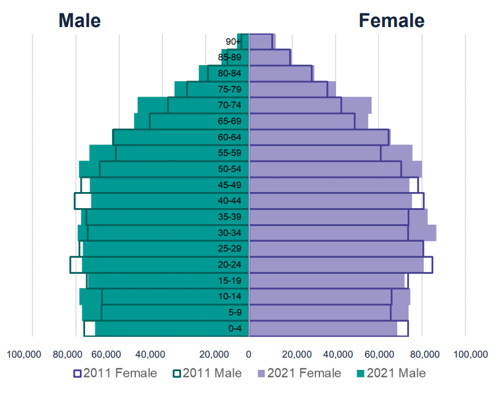
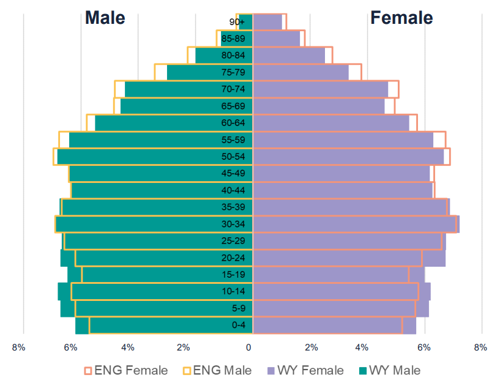
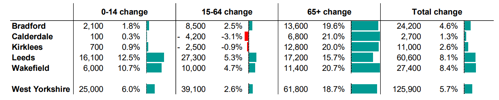
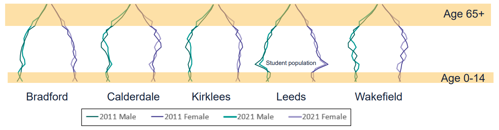
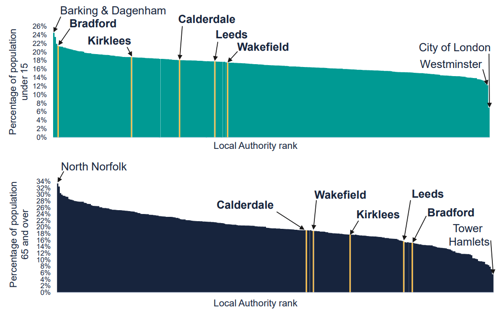
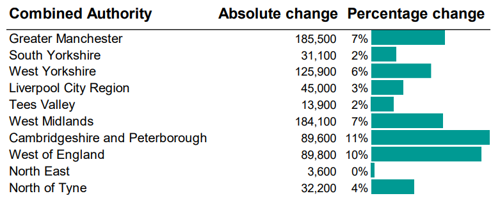
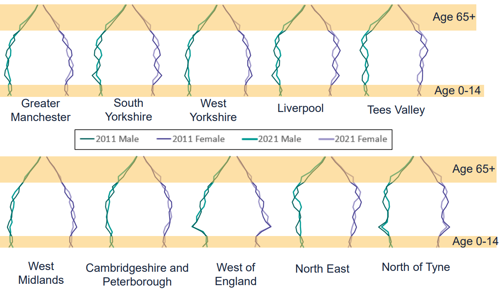
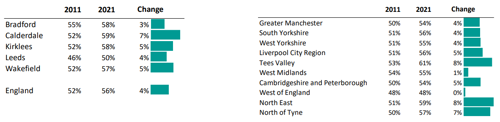
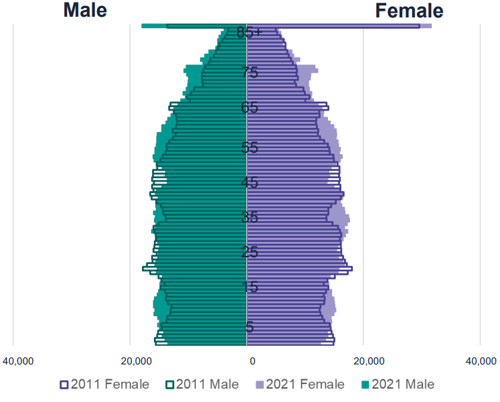
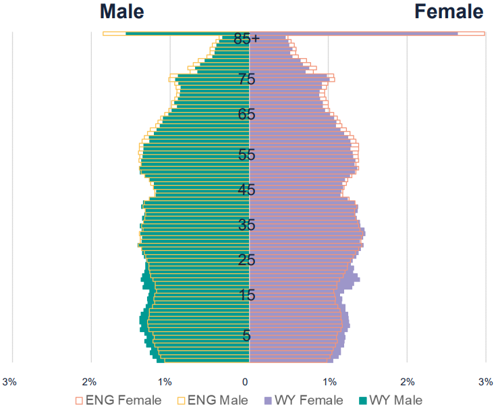
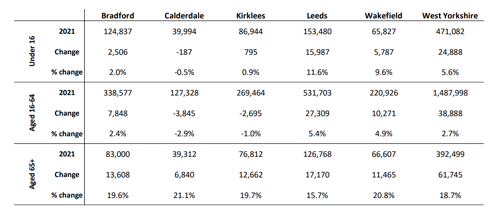
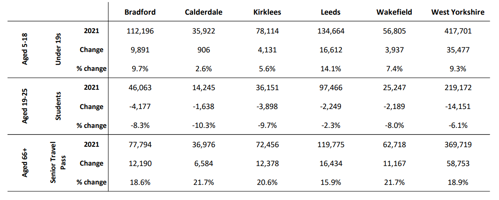
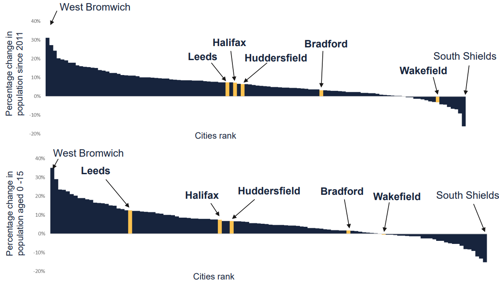
Released in June 2021, this initial data set covers rounded counts of households and people, including population by sex and 5-year age bands. We can use this to look at how the population-age profile of West Yorkshire has changed through time.
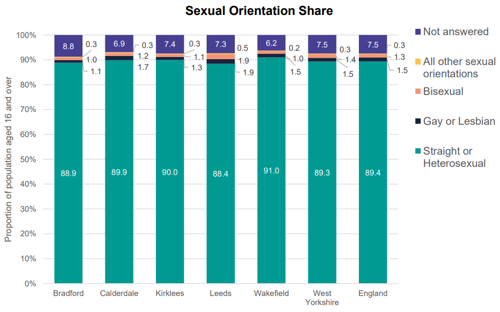
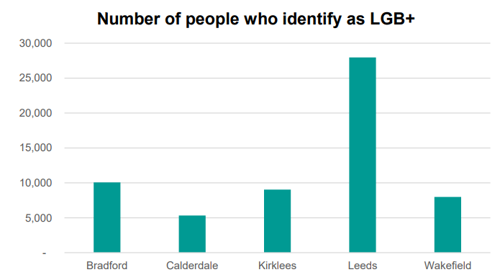
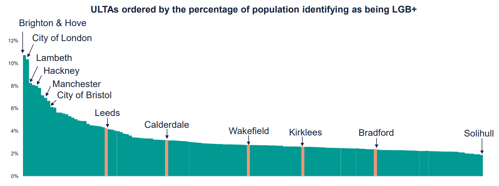
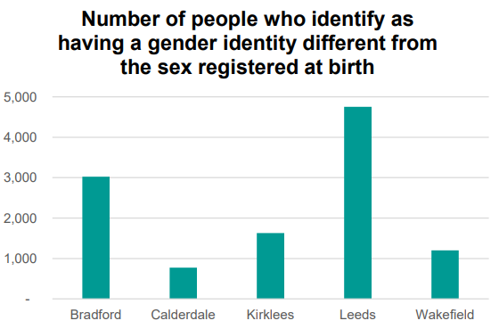
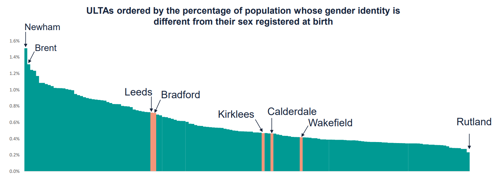
Released in early January 2023, this topic summary is particularly important as it marks the first time questions about sexual orientation and gender identity have been included on the Census.
Released in early January 2023, these data tables cover accommodation type, tenure, rooms, bedrooms and occupancy, central heating type as well as car ownership.
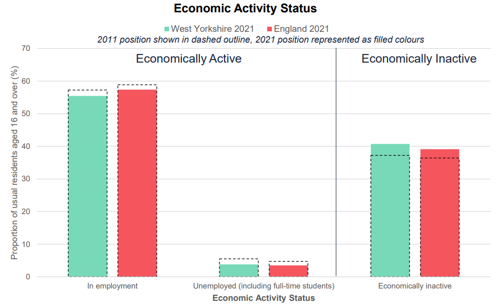
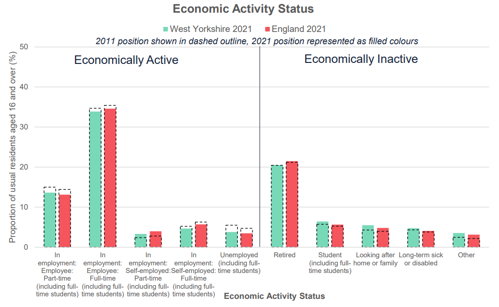
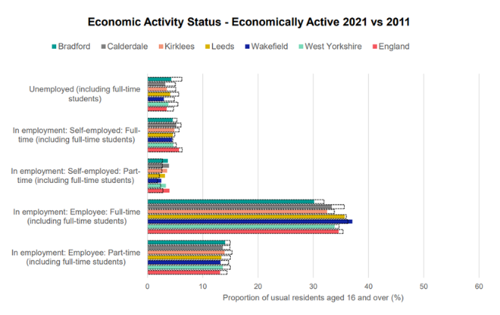
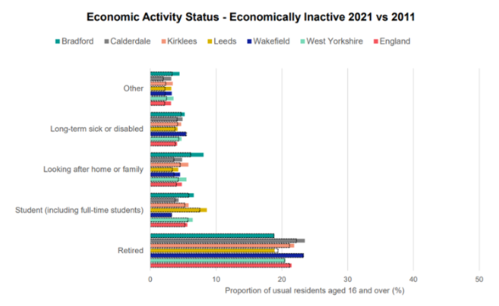
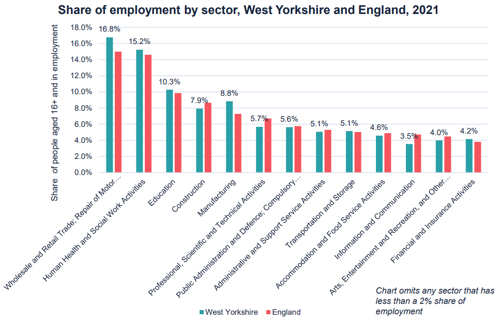
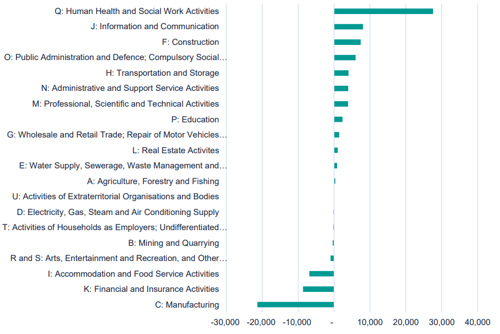
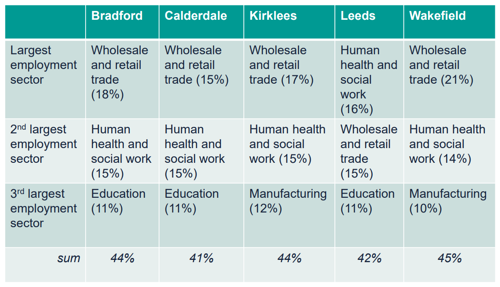
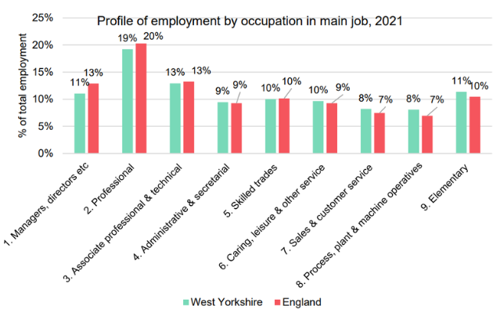
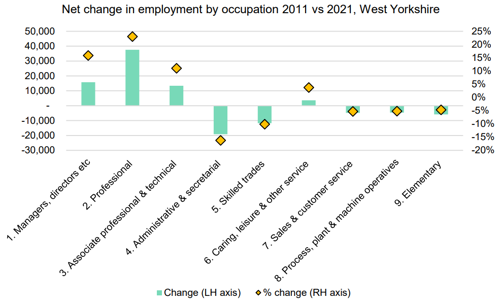
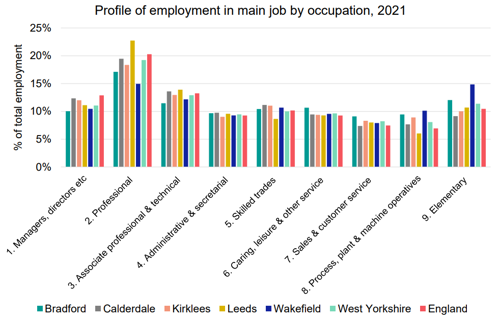
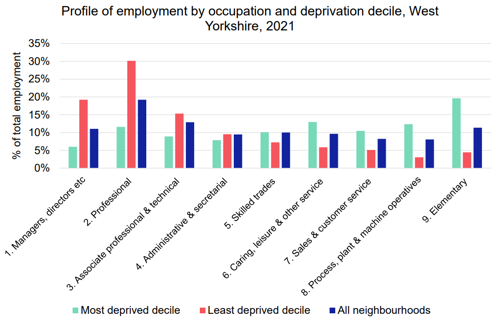
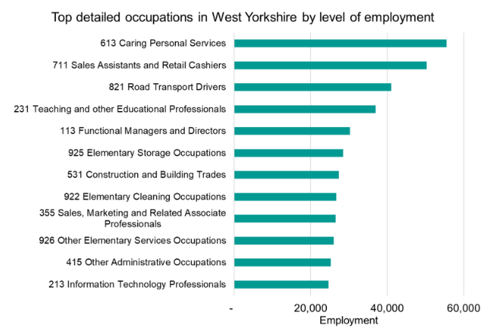
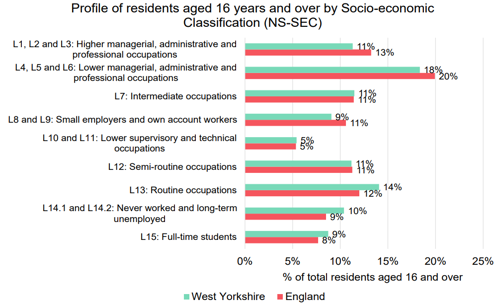
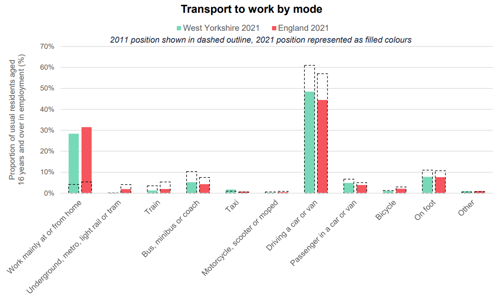
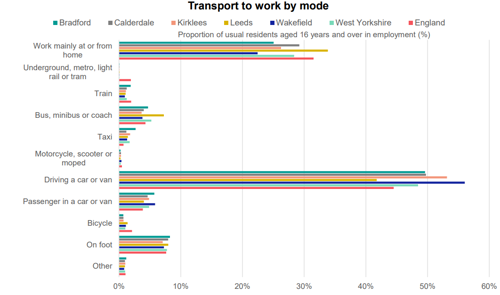
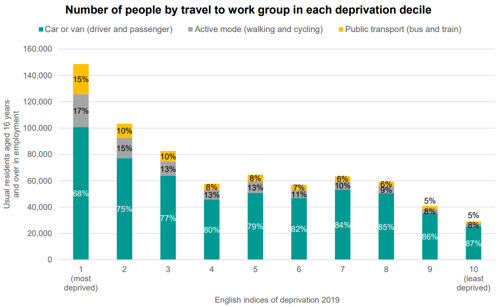
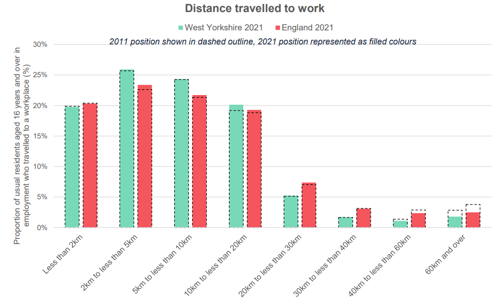
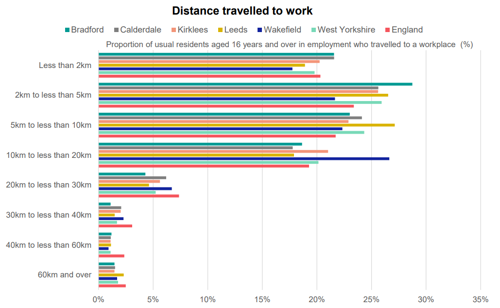
Released in early December 2022, these data tables cover economic activity, occupation, industry, as well as main mode and distance travelled to work.
There are some important caveats with this release associated COVID-19. The Census 2021 took place in March 2021 during the COVID-19 pandemic, a period of unparalleled and rapid change which included:
These measures have affected the labour market and travel to work topic and a full list of caveats are listed below. As a result, please take care when using these data for planning and policy purposes or get in touch with the Research and Intelligence Team for advice on the most appropriate data sources to address your needs with regards to these labour market indicators.
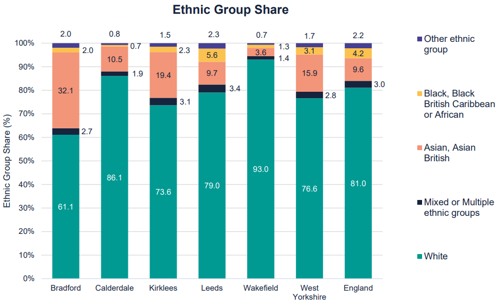
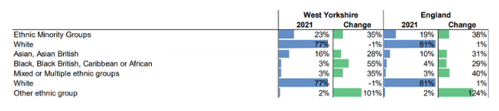
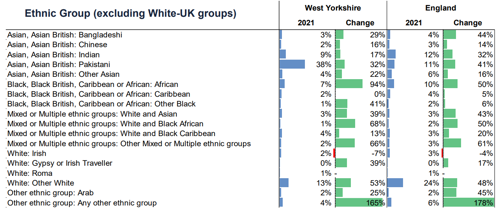
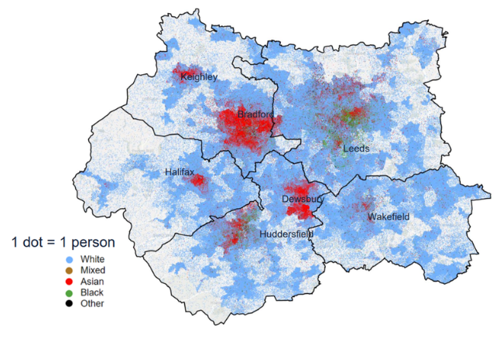
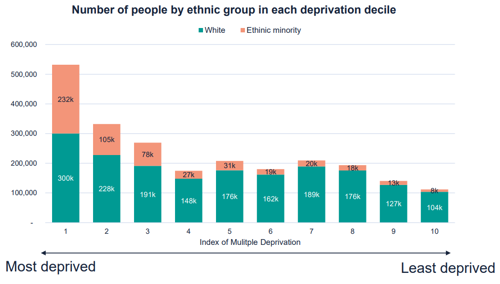
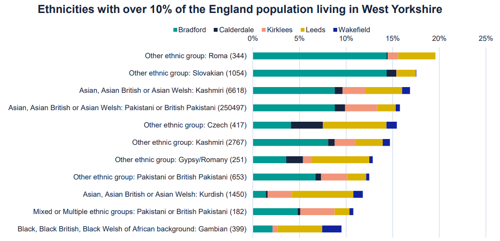
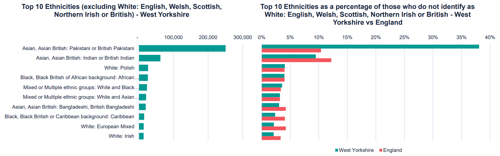
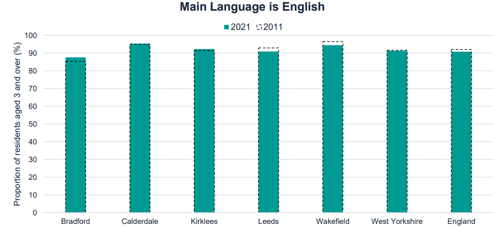
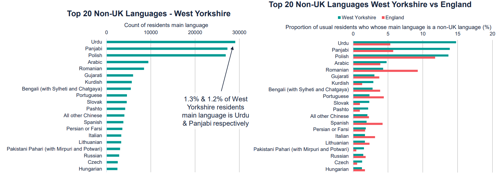
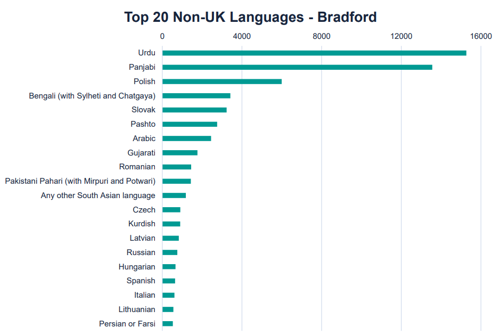
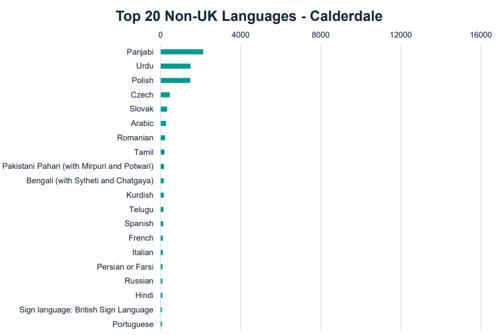
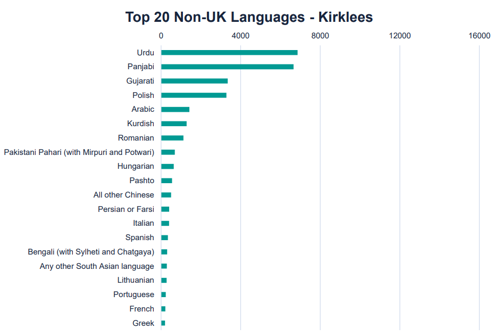
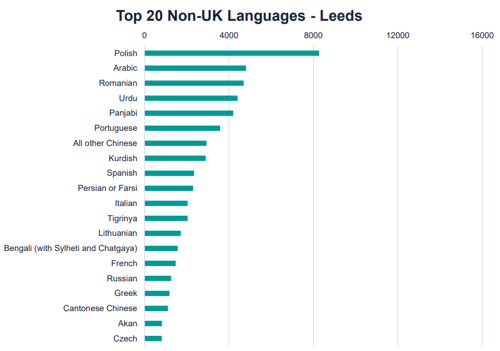
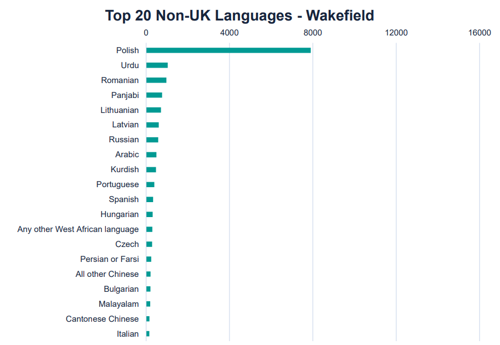
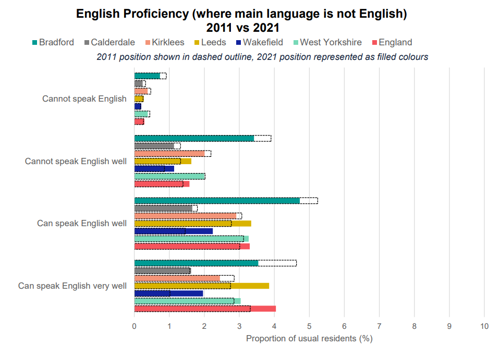
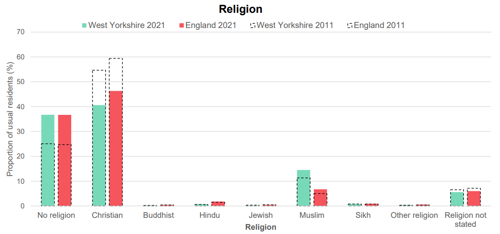
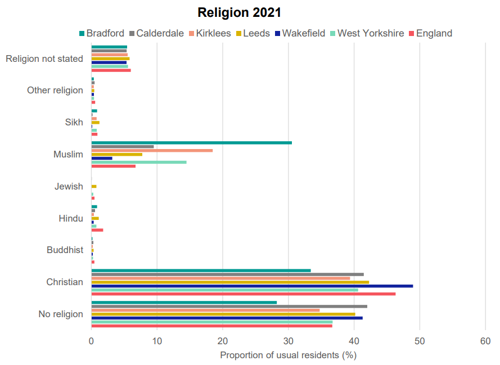
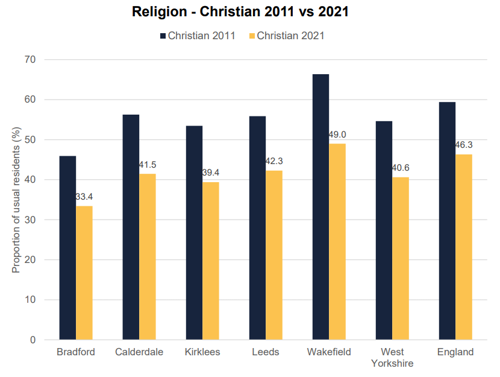
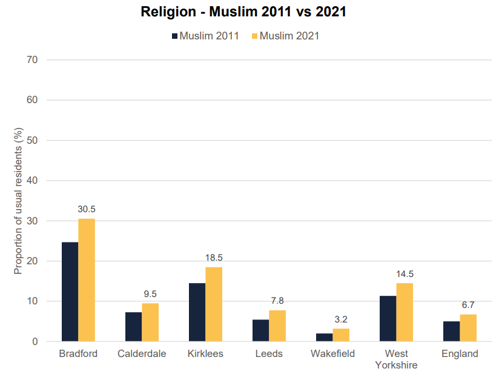
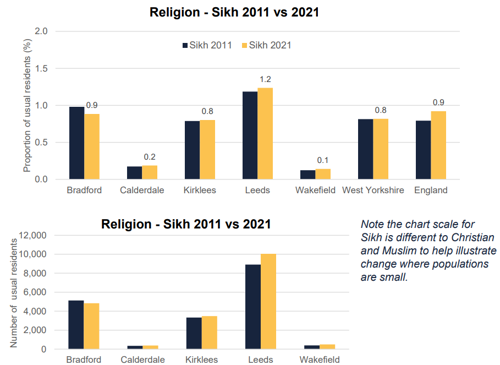
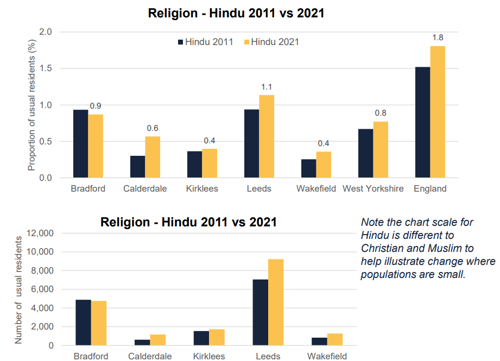
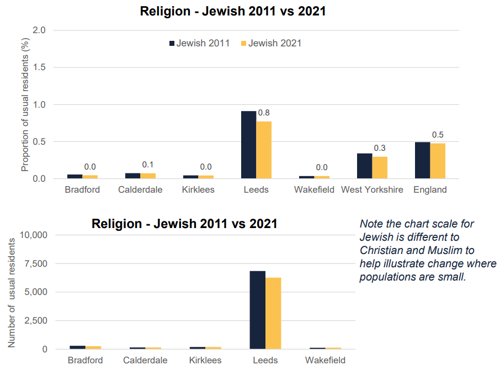
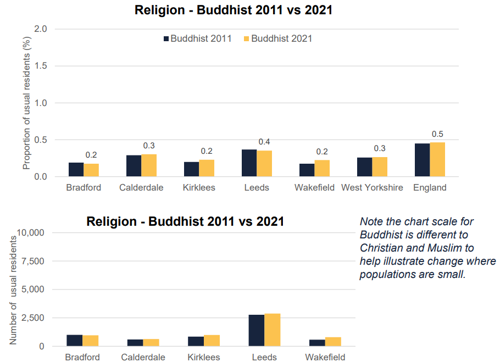
Released at the end of November 2022, these data tables cover ethnic group, main language spoken, English proficiency, and religion. Like other releases, as the data is available at neighbourhood level it provides an opportunity to examine it in relation to deprivation.
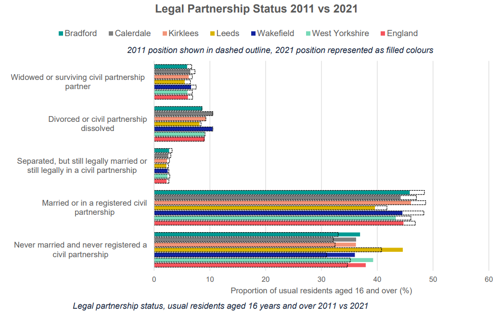
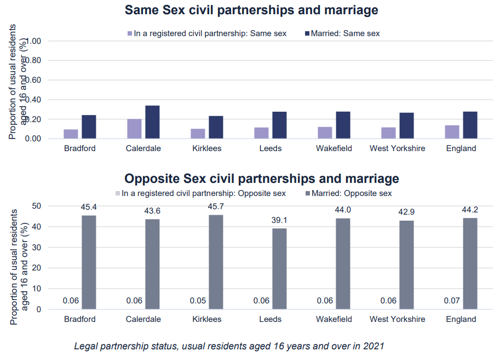
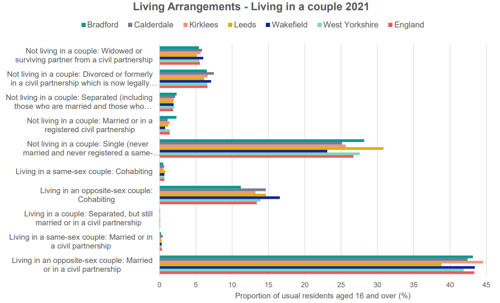
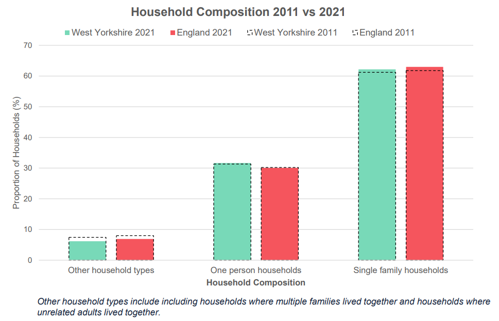
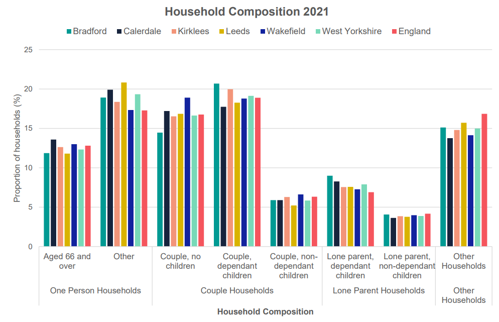
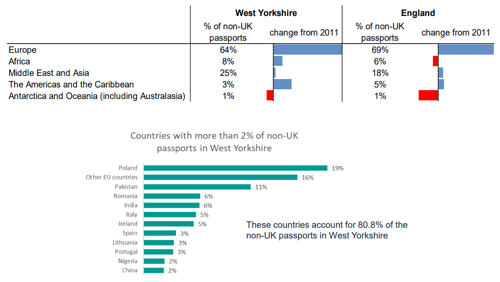
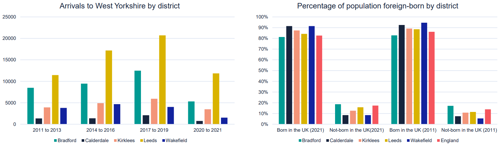
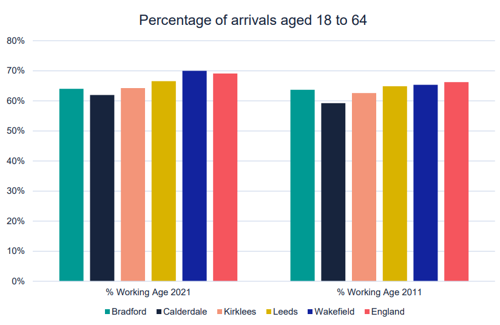
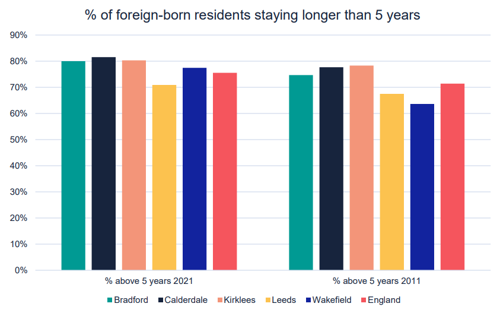
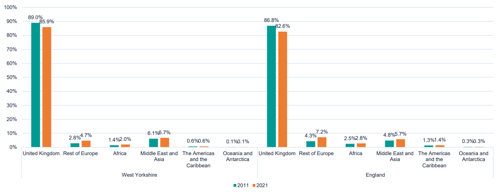
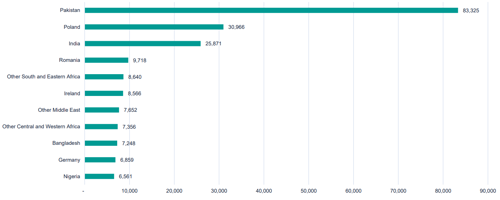
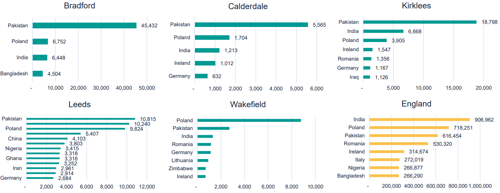
Released in early November 2022, these data tables cover counts of people (by single year of age) down to neighbourhood level, as well as martial status, living arrangements (e.g. in a couple/with children) and also passports held, and country of birth.